A Global Milestone for Amphibian Conservation
The 1st World Congress on Amphibians convenes the global scientific community in Sri Lanka to address the accelerating biodiversity crisis and celebrate frontline herpetological discoveries.
Why a Dedicated World Congress?
Amphibians are the most threatened vertebrate class — over 41% of assessed species face extinction from habitat loss, climate disruption, and chytridiomycosis. This congress was established to unite researchers, policy-makers, and conservationists under one unified scientific umbrella.
As a decadal summit, it will produce actionable recommendations for the IUCN Amphibian Specialist Group, influence national biodiversity strategies, and empower early-career researchers from tropical nations.
70+ Nations
Delegates across all 6 continents.
Action-Driven
Translating science into policy.
WCA 2027 Scientific Mandate
1st World Congress on Amphibians
Amphibians embody evolutionary transitions bridging aquatic and terrestrial biomes for over 350 million years. Today, they serve as the planet's most sensitive bio-indicators.
Hosted in Sri Lanka, the congress fosters international data-sharing, disease surveillance protocols, and actionable habitat protection roadmaps.
Sri Lanka: A Global Hotspot of Amphibian Diversity
An island of extraordinary amphibian diversity, remarkable endemism and an urgent conservation story.
Sri Lanka, despite its relatively small land area of 65,610 km², is recognised as one of the world's most important amphibian biodiversity hotspots. Its unique geographical position, diverse climatic conditions, complex geological history and wide range of natural habitats have contributed to the evolution of an exceptionally rich amphibian fauna.
65,610 km²
Land Area
Compact high-density island
87% Endemic
96 of 110 Species
+ ~15 awaiting description
3 Genera
100% Endemic
Adenomus, Lankanectes, Nannophrys
~9% Global
Amphibian Families
6 Anuran + 1 Gymnophiona
17 Extinct
Documented Species
Colonial plantation clearance
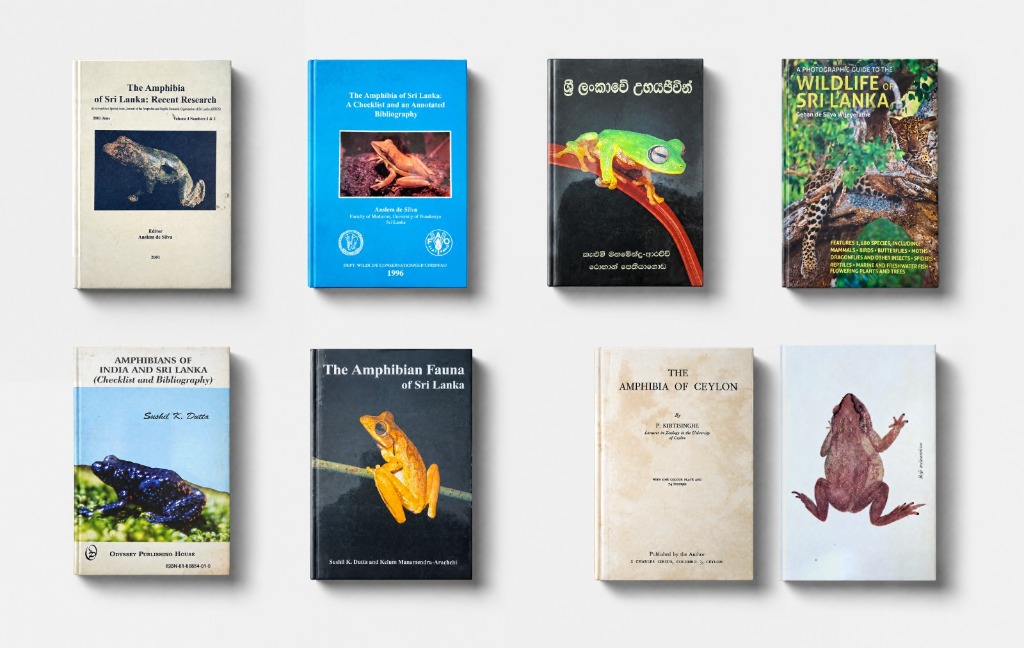
Sri Lankan Amphibian Literature
Founding Partners of WCA 2027
The pioneering scientists and global conservation leaders who conceived the 1st World Congress on Amphibians, uniting international networks for global amphibian preservation.

Dr. Anslem De Silva
A pioneering authority on South Asian herpetofauna, Dr. De Silva has dedicated decades to documenting and conserving Sri Lanka's extraordinary amphibian biodiversity and mentoring generations of field scientists.

Prof. Amaël Borzée
An internationally acclaimed researcher in amphibian ecology and behavioral biology, Prof. Borzée bridges Asian and global amphibian science, driving transformative conservation initiatives worldwide.

Dr. Sally Wren
A leading voice in global amphibian conservation strategy and action plans, Dr. Wren has spearheaded numerous international programs safeguarding threatened amphibian species across continents.